If you live in McKinney, Frisco, or anywhere in North Texas, you know what intense sun does to skin. The brown spots that appear on your cheeks after summer. The melasma patches that worsened after your last pregnancy. The post-acne marks that linger long after the breakout cleared. Hyperpigmentation is one of the most common skin concerns we treat at Bianca Esthetics — and the right chemical peel can make a transformative difference.
But not every peel works for every type of pigmentation, and the wrong choice can sometimes make pigmentation worse. This guide walks through how chemical peels actually treat hyperpigmentation, which Bianca Esthetics peels work best for which types of discoloration, and what realistic results look like for clients with North Texas skin and lifestyles.
Hyperpigmentation is the umbrella term for any patch of skin that appears darker than the surrounding skin. The mechanism is the same across types — melanocyte cells overproduce melanin, the brown pigment that gives skin its color — but the trigger differs significantly, and the trigger determines the right treatment.
The four main types of hyperpigmentation:
Identifying which type you have is the first step. The American Academy of Dermatology emphasizes that misidentified melasma — for example, treated as a sun spot with aggressive resurfacing — can rebound darker than before treatment. This is why a proper consultation matters more than picking a peel by name.
A chemical peel uses an acid solution to controlled-exfoliate the upper layers of skin, accelerating the natural shedding cycle and bringing newer, more evenly-pigmented skin to the surface. Different acids penetrate to different depths, and different formulations target the specific type of pigmentation you have.
When done correctly, peels do four things at once: they remove pigmented surface cells, suppress melanin overproduction at the cellular level, increase product penetration so brightening serums work better afterward, and stimulate cell turnover that gradually refines tone over weeks. When done incorrectly, peels can trigger more pigmentation in skin tones not properly assessed in advance — which is exactly why the consultation step is non-negotiable.
Bianca offers a full peel menu, but four treatments do the heavy lifting for hyperpigmentation. Here is when each one is the right choice.
The PCA Hyperpigmentation Corrective Peel is purpose-built for the most common North Texas pigmentation problems. The PCA SKIN brand has built its reputation on professional-grade peels that pair acid blends with brightening agents — meaning the peel does the resurfacing while ingredients like hydroquinone alternatives, kojic acid, and tyrosinase inhibitors work directly on the melanin pathway.
Best for: Solar lentigines, melasma (with proper sun protection between treatments), post-inflammatory hyperpigmentation from acne or trauma.
What to expect: Mild to moderate flaking for 3 to 5 days. Visible improvement after the first treatment, with full results typically appearing after a series of 3 to 5 sessions spaced 4 weeks apart.
The PCA Medium Peel goes a step deeper than the Mild version, making it appropriate for clients with established sun damage who can tolerate slightly more downtime.
Best for: Generalized sun damage, mild to moderate fine lines, dull skin tone with diffuse pigmentation rather than discrete spots.
What to expect: 4 to 7 days of light flaking. Best as part of a series rather than a standalone treatment.
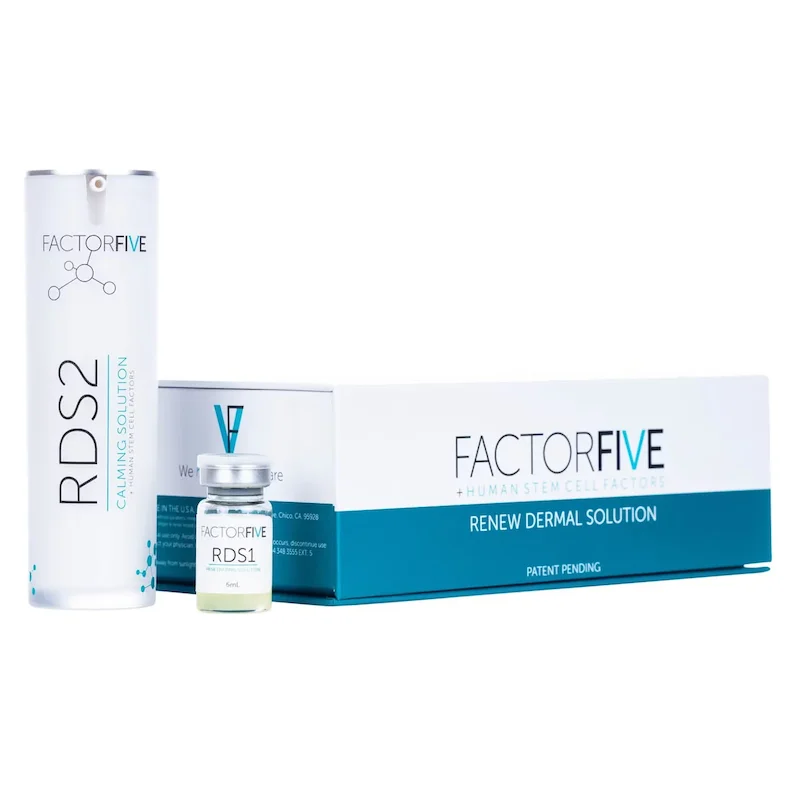
The RDS Treatment is one of Bianca's most-requested services for clients who want results without traditional peel downtime. RDS uses a two-step protocol with FactorFive growth factors that target multiple concerns simultaneously — fine lines, hyperpigmentation, sun damage, sagging, and acne scars — without the photosensitivity or extended peeling associated with classic chemical peels.
Best for: Clients with multiple concerns who do not want visible peeling. Clients in active social or professional life who cannot take downtime. Clients who have plateaued on traditional peels and want a different mechanism.
What to expect: Minimal to no peeling. Year-round safe. Best results after a series of 3 to 4 sessions.
For clients whose primary pigmentation concern is post-acne marks (PIH), the Acne Peel often outperforms a generic brightening peel because it addresses the root cause: ongoing inflammation and clogged pores. Treating the active acne is the only way to stop new PIH from forming.
Best for: Active or recurring acne with associated dark marks. Oily, congested skin with uneven tone.
What to expect: 3 to 5 days of light flaking. Pairs well with the Acne Clarifying Facial and LED Light Therapy for compounded results.
The wrong way to choose a peel is to read marketing copy and pick the one that promises the most. The right way is to match the peel to your specific pigmentation type, your tolerance for downtime, and your skin tone.
If you have discrete brown spots from sun exposure: Start with the PCA Hyperpigmentation Corrective Peel. Plan a series of 3 to 5 treatments and commit to daily sunscreen between sessions.
If you have melasma (especially after pregnancy or hormonal changes): Book a consultation first. Melasma requires a gentler, multi-modal approach — the PCA Hyperpigmentation Corrective Peel can help, but only as part of a plan that includes prescription topicals and rigorous sun protection.
If you have post-acne dark marks: The Acne Peel addresses the cause and the mark together. Add LED therapy and the Acne Clarifying Facial for a comprehensive protocol.
If you cannot afford visible downtime: The RDS Treatment is your option. It will not work as fast as an aggressive peel, but it will work consistently with no peeling.
If you have darker skin tones (Fitzpatrick IV–VI): Always start gentler than you think you need. Aggressive resurfacing on melanin-rich skin can rebound with worse pigmentation than you started with. The PCA Mild Peel or RDS Treatment is almost always the safer first choice.
No peel works in isolation. The single biggest predictor of long-term hyperpigmentation results is what you do between treatments — specifically, how aggressively you protect against UV.
The non-negotiable aftercare protocol:
The American Cancer Society reports that UVA exposure — which penetrates clouds and car windows — is a primary driver of pigmentation. North Texas drivers logging hours on the road are getting consistent UV exposure on the left cheek and forearm. If you peel-treat one cheek and skip sun protection in the car, you will see exactly that asymmetry play out in your results.
Most peel results are determined before the peel ever happens. Skin that is properly prepped responds faster, peels more evenly, and has dramatically lower risk of post-inflammatory hyperpigmentation.
In the 2 to 4 weeks before a peel, do:
In the 48 hours before a peel, avoid:
Clients who follow pre-peel prep see measurably better outcomes after fewer sessions. It is the lowest-effort, highest-impact part of the entire protocol.
Hyperpigmentation is a marathon, not a sprint. Honest expectations:
The goal is not perfect skin. The goal is significantly better, more even, healthier-looking skin that responds better to your home routine.
How many peels do I need to see results for hyperpigmentation?
Most clients need a series of 3 to 5 peels spaced 4 weeks apart to see substantial improvement. You will likely see some difference after the first treatment, but lasting results come from consistent, repeated treatment paired with diligent sun protection between sessions.
Can chemical peels make hyperpigmentation worse?
Yes — if the wrong peel is used on the wrong skin type, or if aftercare (especially sun protection) is neglected. This is why consultation matters more than peel selection. Aggressive peels on Fitzpatrick IV–VI skin without proper preparation can trigger post-inflammatory hyperpigmentation that is worse than the original concern.
Are chemical peels safe during summer in Texas?
Yes, with caveats. The RDS Treatment is specifically formulated to be year-round safe with no photosensitivity. Traditional PCA peels are also safe in summer if you commit to rigorous sun protection. We recommend scheduling outdoor events 7 to 10 days after a peel to give skin time to fully recover.
How is a chemical peel different from a HydraFacial?
A HydraFacial is primarily about cleansing, hydration, and surface exfoliation — it produces a same-day glow with no downtime. A chemical peel is corrective and creates measurable change in skin layers, with some downtime in exchange for deeper results. Many clients alternate between the two for a balanced, year-round skincare plan.
Will my insurance cover chemical peels?
Cosmetic chemical peels for hyperpigmentation are not covered by insurance, as they are considered elective. Some HSA and FSA accounts may cover treatments deemed medically necessary by a physician — this varies by plan. Bianca Esthetics provides itemized receipts for clients who want to submit claims.
What is the best peel for melasma specifically?
Melasma is one of the trickiest pigmentation types because it is hormonally driven and prone to recurrence. The PCA Hyperpigmentation Corrective Peel can help, but it must be paired with a melasma-specific home regimen — typically a tyrosinase inhibitor like hydroquinone (often via a dermatologist prescription), tranexamic acid serum, and absolute sun protection. Aggressive resurfacing alone can actually worsen melasma. Bianca Esthetics often coordinates with clients' dermatologists for severe cases.
Should I stop using retinol before my peel?
Yes. Stop retinol or prescription tretinoin 5 to 7 days before your peel and resume 7 to 10 days after, depending on the depth of the peel and your skin's recovery. Your esthetician will give you specific timing during your consultation.
Can I combine peels with the Hydra-Renew Experience?
Yes — and many clients do. Some pair the Hydra-Renew Experience with monthly PCA peels for layered results: the Hydra-Renew delivers HydraFacial cleansing plus growth-factor RDS work, while the targeted peel addresses specific spots in between. Spacing matters — never stack two resurfacing treatments in the same week. Your consultation will map out a calendar that respects your skin's recovery time.
Hyperpigmentation responds best to a customized plan, not a single peel. Bianca brings 18 years of medical aesthetics experience to every consultation, with training in San Francisco, Miami, and Mexico City and a focus on clients with diverse skin tones and Texas-level sun exposure.
Every plan starts with a real conversation about your pigmentation type, your skin tone, your goals, and your lifestyle. Then the right peel — or sometimes the right combination of peel, facial, and home regimen — is selected.
✨ Customized peel selection based on your skin type, not a generic menu
✨ Boutique studio in McKinney serving Frisco, Allen, and North Texas
✨ Multilingual service (English, Spanish, Romanian)
Ready to address your hyperpigmentation?
Book your Skin Care Consultation →


